Background
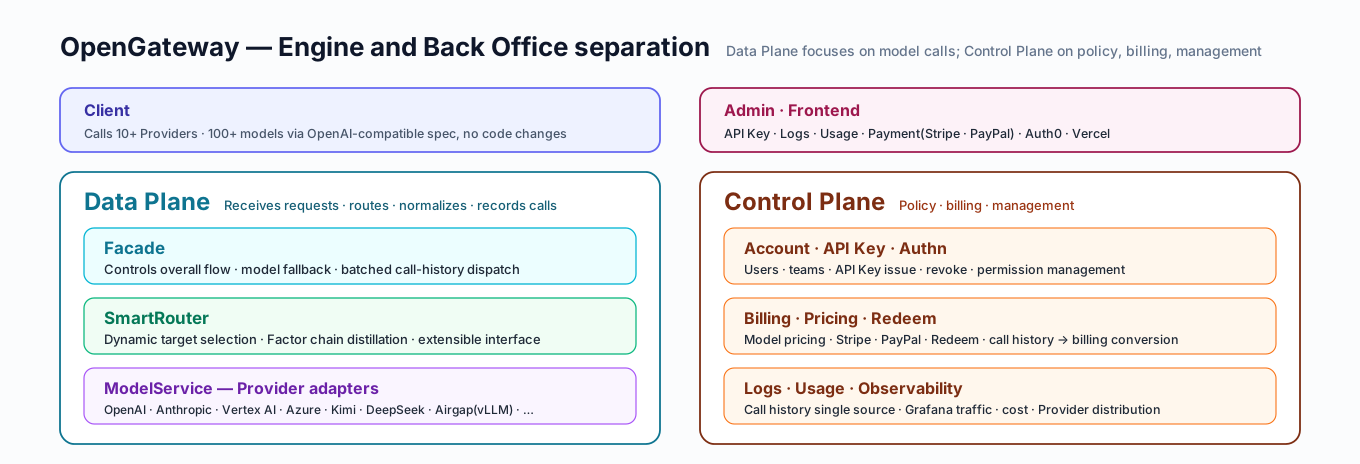
OpenGateway is an AI Gateway that serves multiple Model Providers through an OpenAI-compatible API.
It was initially developed as a feature used only by internal services, but as external customers wanting model routing emerged, the need arose to extend it into a standalone API product.
- Parameter compatibility and routing quality had to be maintained even as models and Providers changed across SaaS / airgap environments
- Considering zone separation such as
krandjpand airgap support, the internal composition needed to be flexibly assembled while preserving the OpenAI API spec
Outcomes
- opengateway.ai — live service
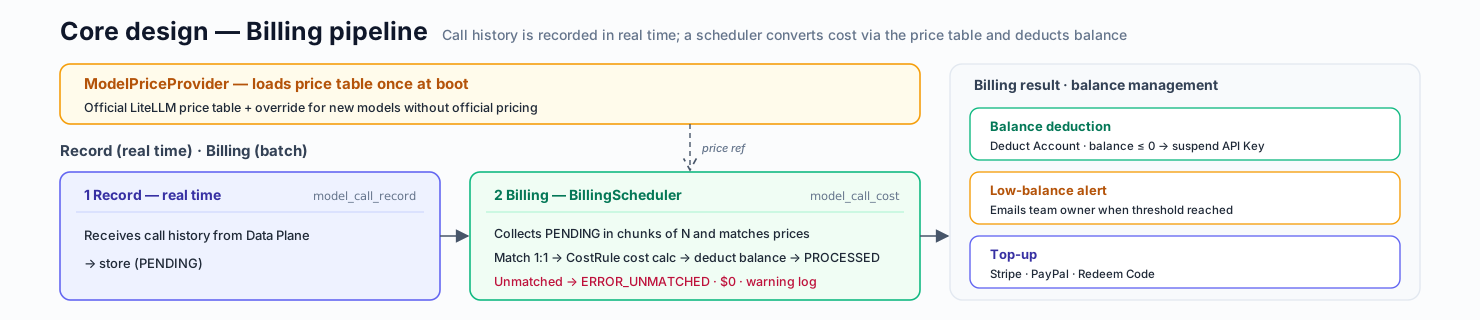
- Extended the existing internal model serving feature into an OpenAI-compatible public API Gateway product, building out every flow including API Key, Authn/Authz, Billing, Logs, and the frontend UI
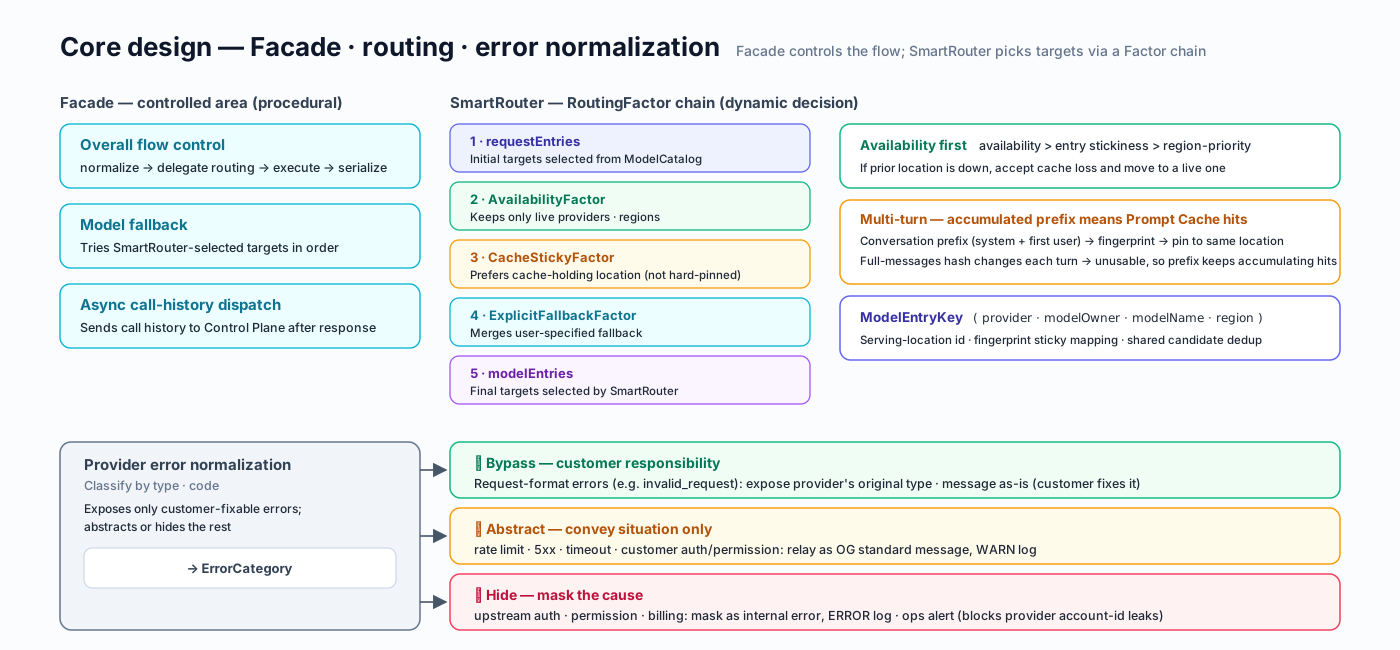
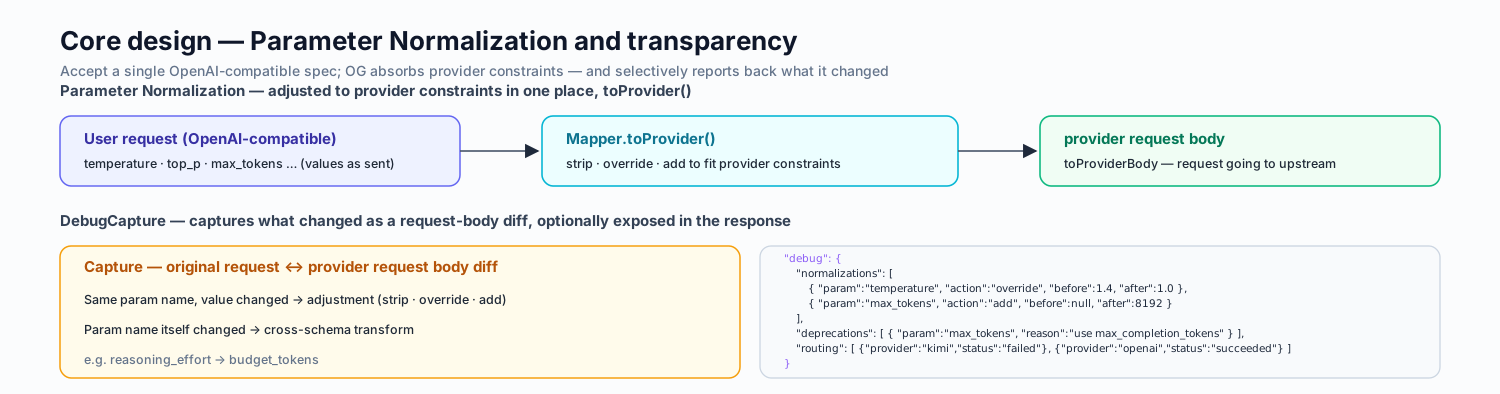
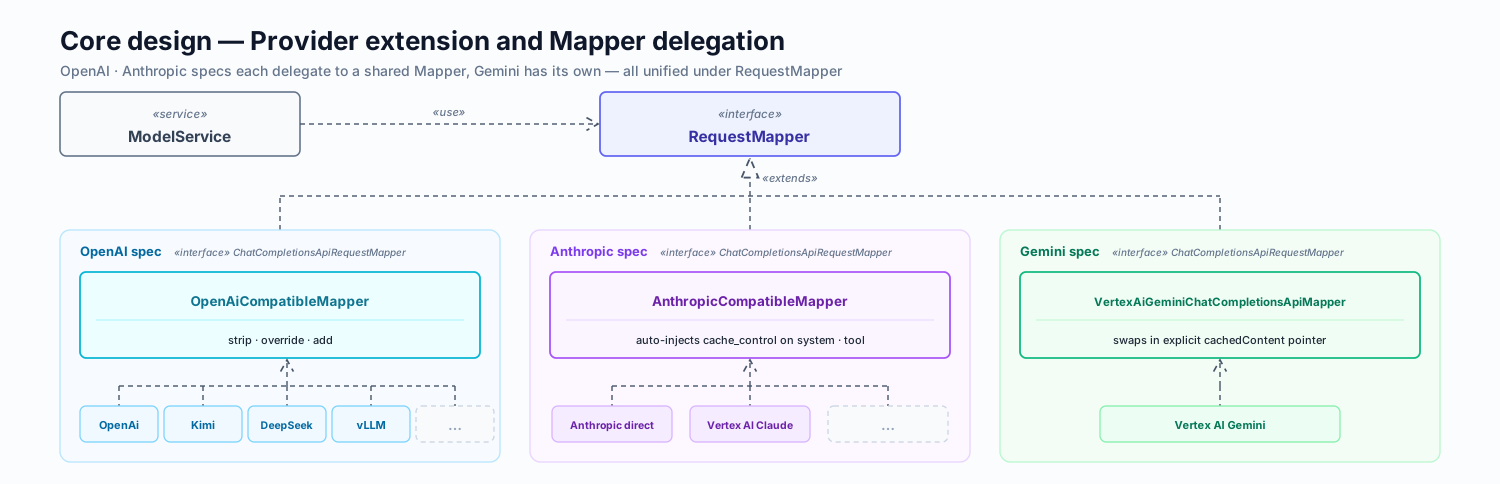
- Designed availability-first routing, Prompt Cache stickiness, parameter/error normalization, and a shared compatibility Mapper delegation structure, enabling consistent expansion to 10+ Providers under a single OpenAI spec
- Stably serving traffic at the level of RPM 200 and Daily 300K, with 10+ Providers and 100+ models
- Connected Redeem Code, Admin features, Grafana observability, and model smoke/CI/daily tests to improve both operational observability and live stability
Design and Implementation
To plan and develop 2 backends and 1 frontend simultaneously with one junior developer, I had to make active use of AI.
- Kept policies and work standards as a single source of truth in Skills, so that humans and AI could work in the same context
- Separated the flows to be controlled from dynamic decision-making in the system, clearly distinguishing the areas to review directly from the areas to delegate to AI
- More details are documented in Thoughts on development that actively leverages AI
Front Office
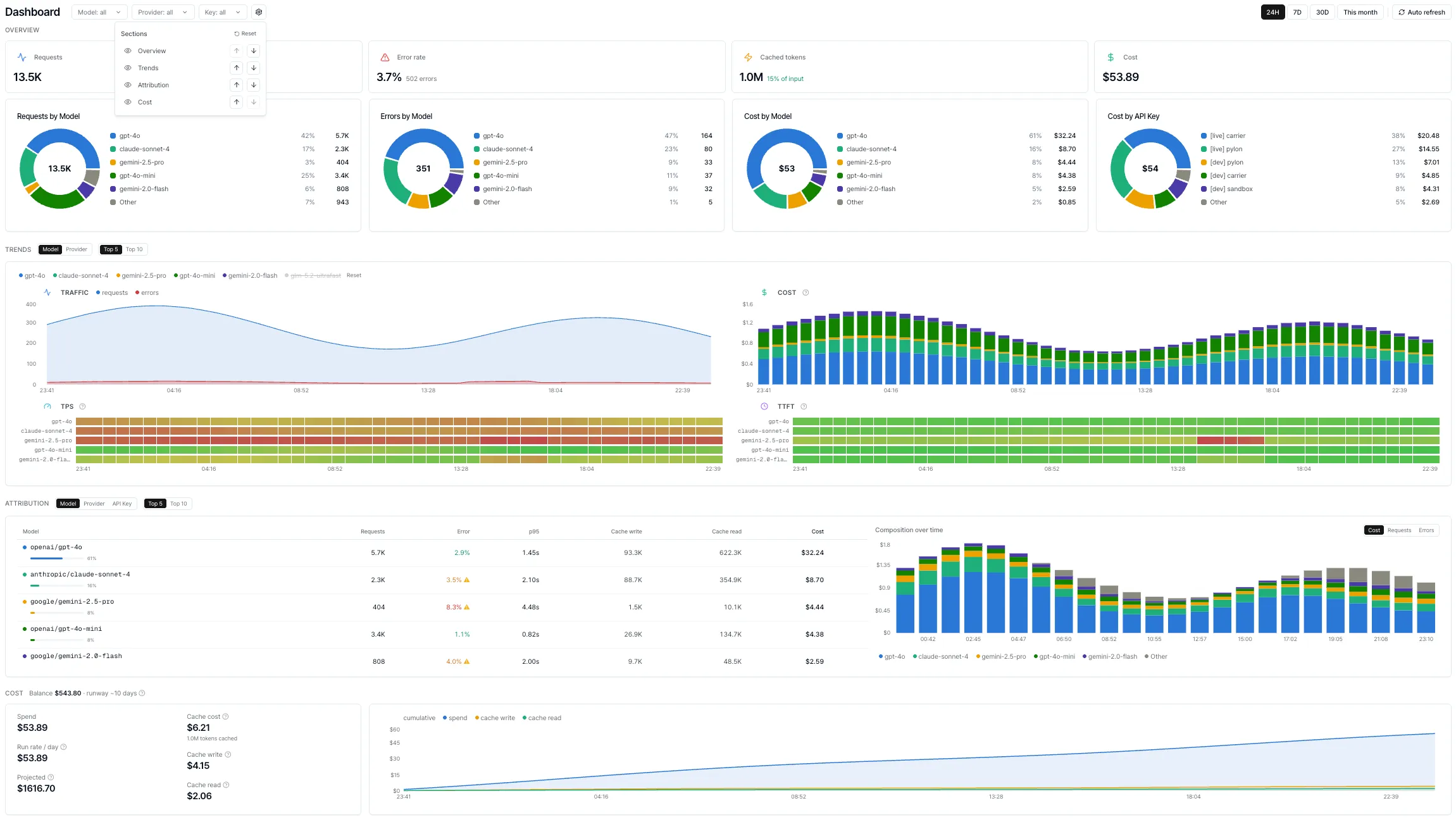
Front Office dashboard with API usage, traffic, and performance metrics.
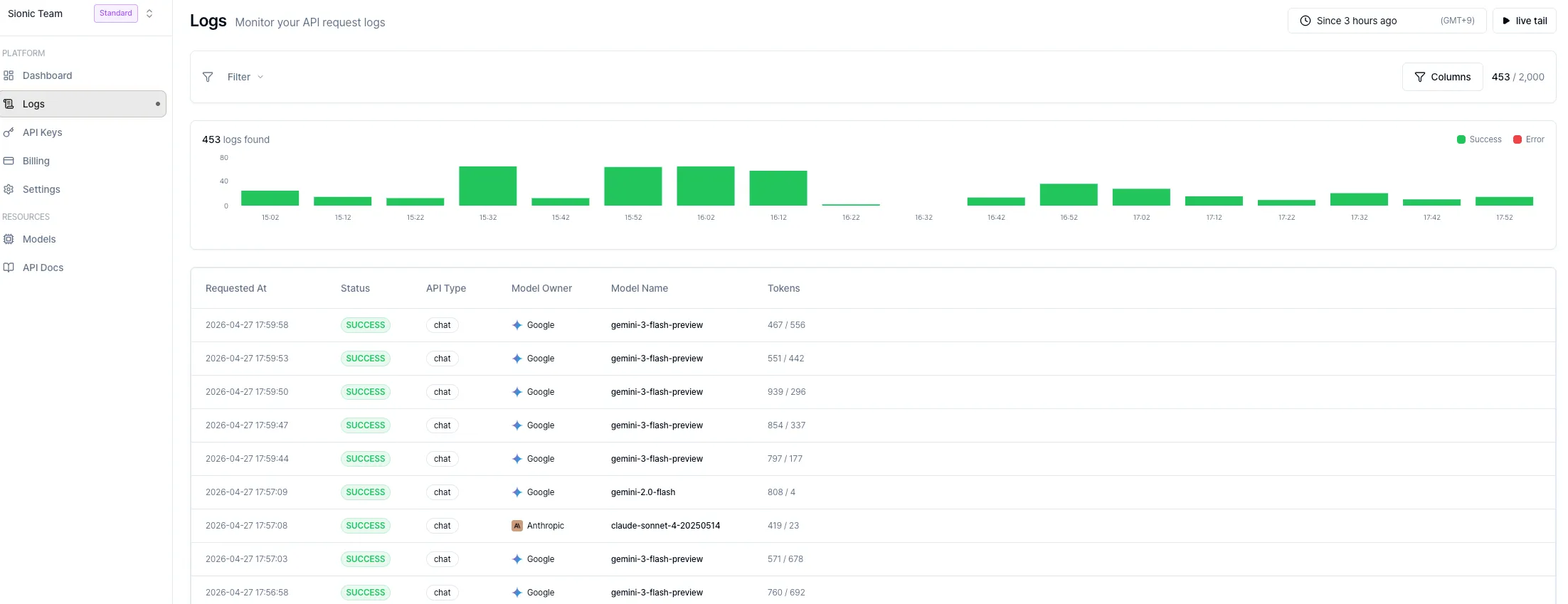
Request logs list with per-call status, model, and timing.
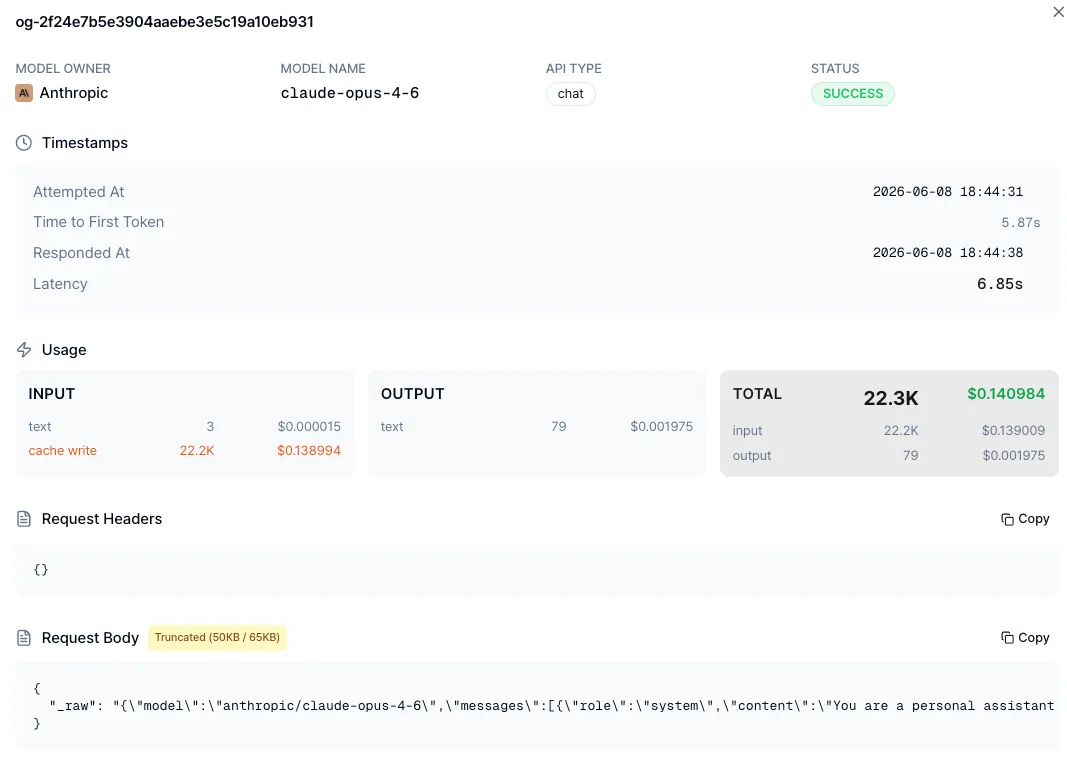
Single log detail view showing request, routing, and response data.
Docs
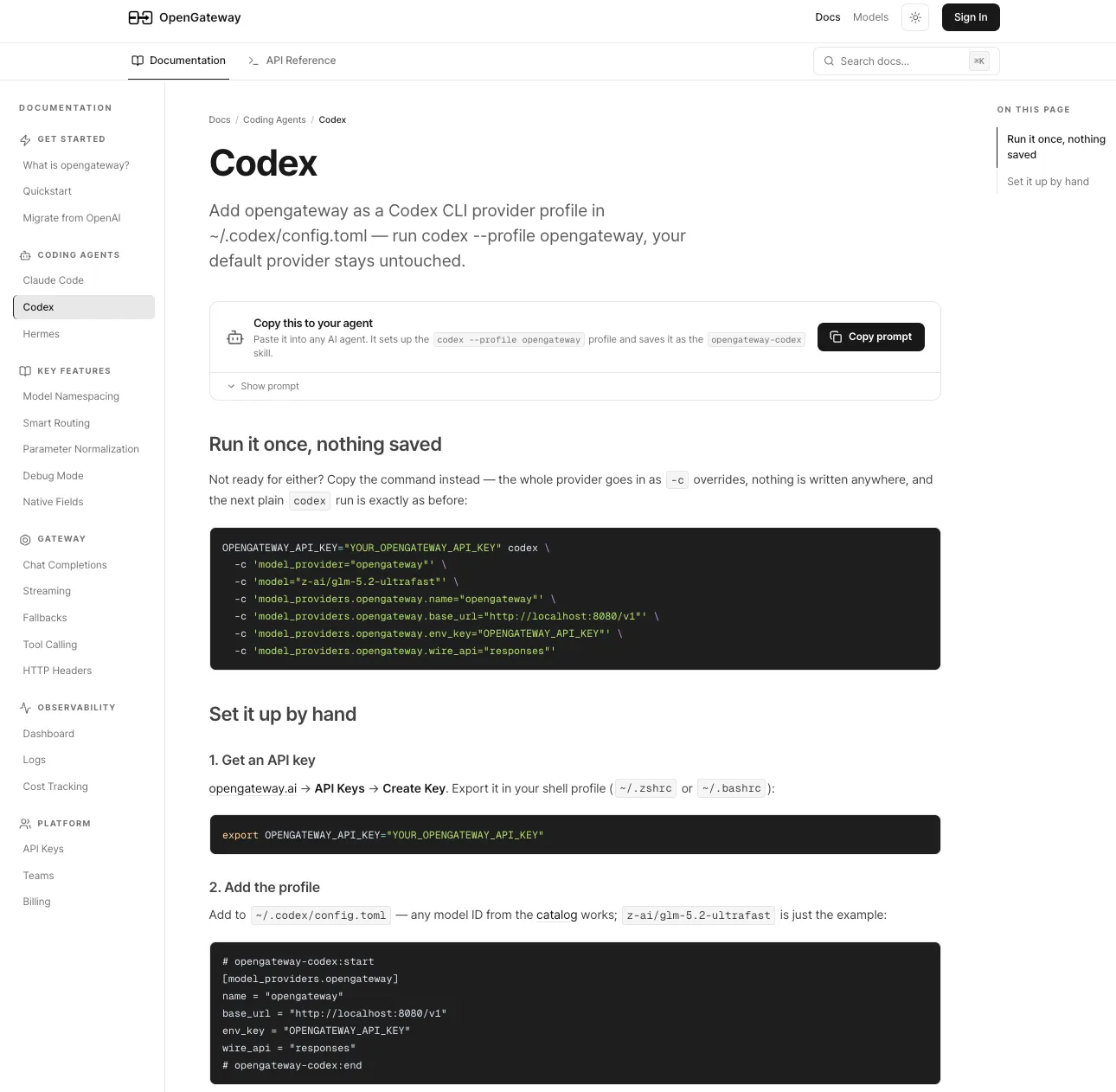
Developer docs site with guides and OpenAI-compatible API reference.
Operational Stabilization
- Managed operational status using Grafana to observe traffic, cost, response time, and Provider distribution
- Standardized recurring operational tasks such as model addition/removal, SDK upgrades, releases, and weekly reports into Claude Skills, improving operational convenience
- Applied smoke tests, CI tests, and daily jobs to 10+ Providers and 100+ models to continuously verify live environment stability
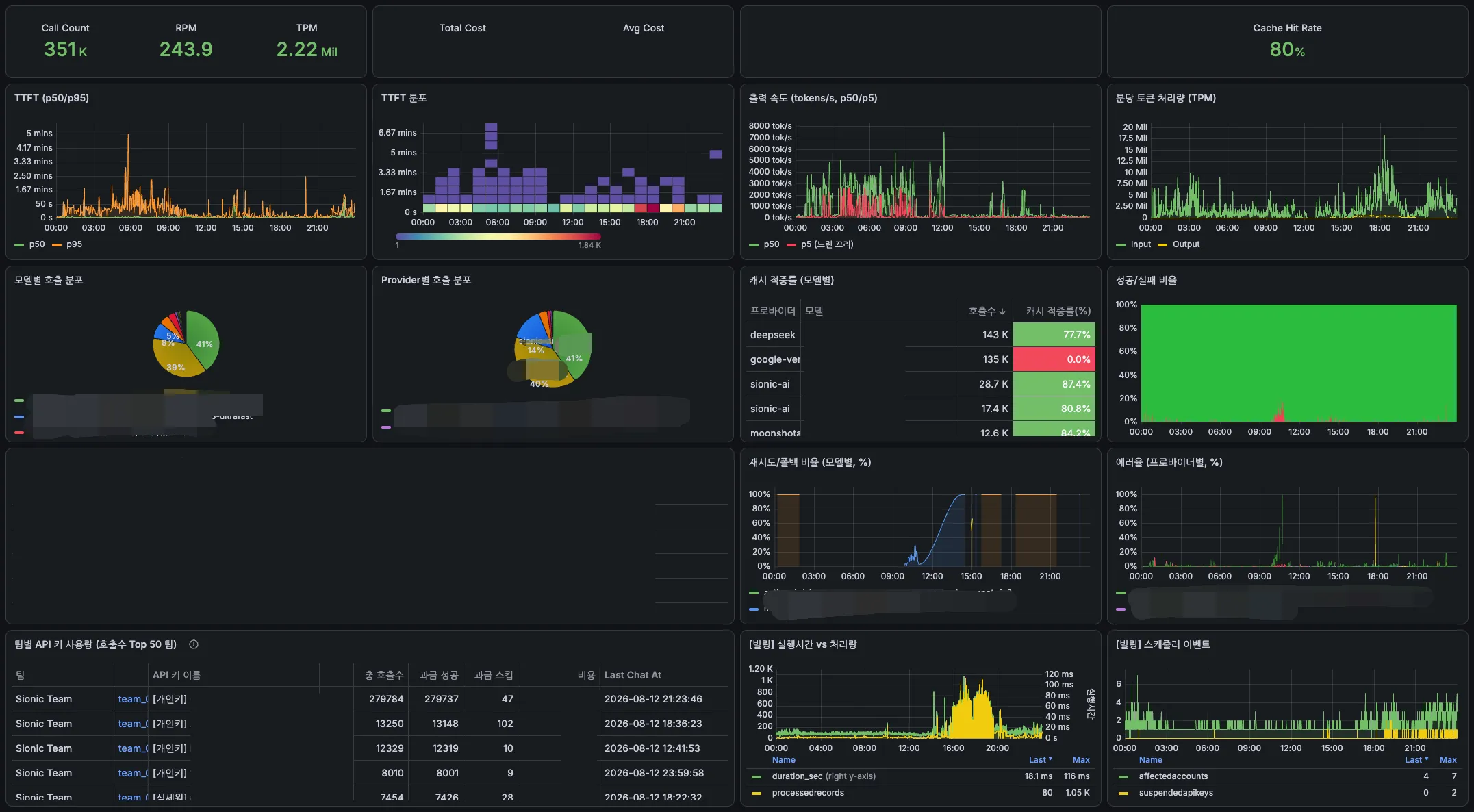
Grafana dashboard tracking traffic, cost, latency, and Provider distribution.
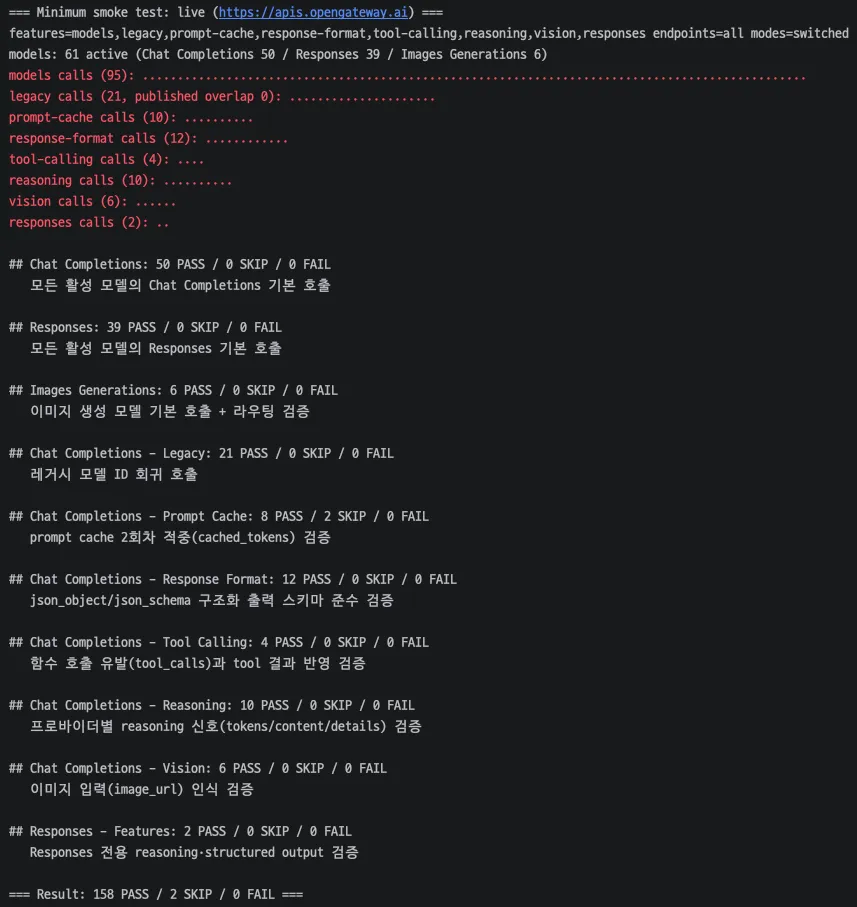
Live smoke-test results verifying Providers and models in production.