Writing good code is only part of the job. What makes a team consistently fast is clear communication, shared knowledge, and habits that compound over time.
Making Problems Explicit
When multiple workstreams are in flight, I document the flow before dividing the work. Writing down decision points, owners, and acceptance criteria means whoever picks up a task can act immediately — no synchronization meeting needed.
Even verbal agreements go back into writing so the context travels with the work.
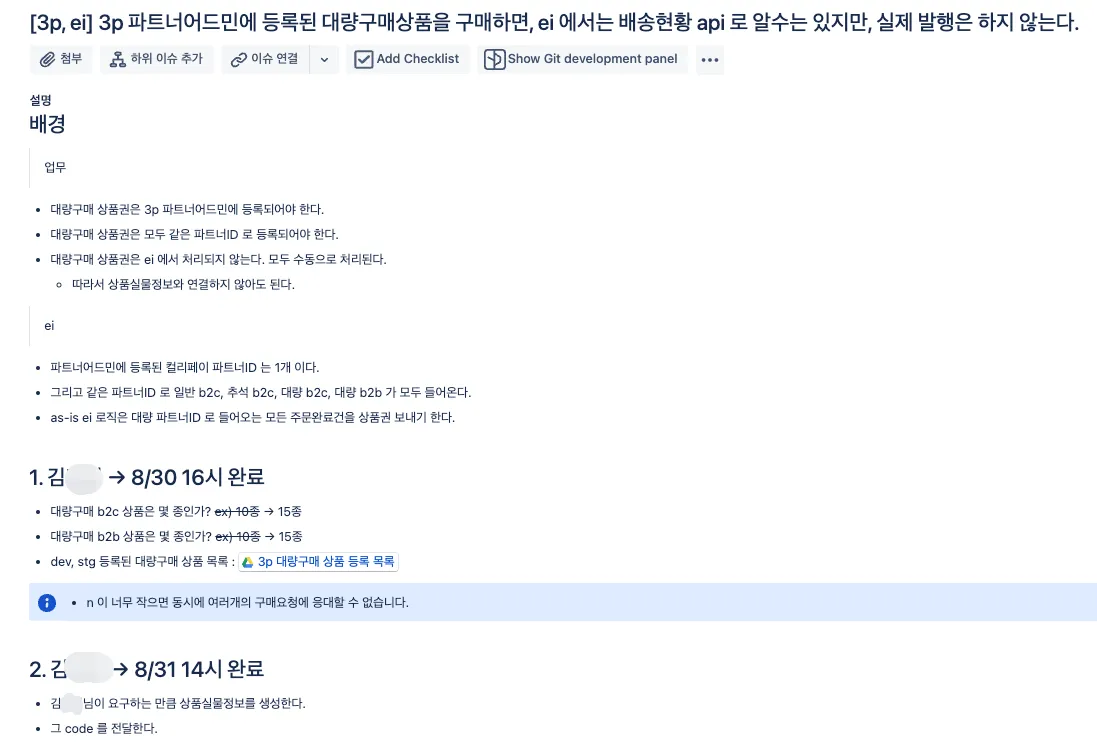
Mapping the problem flow and decision points before splitting work.
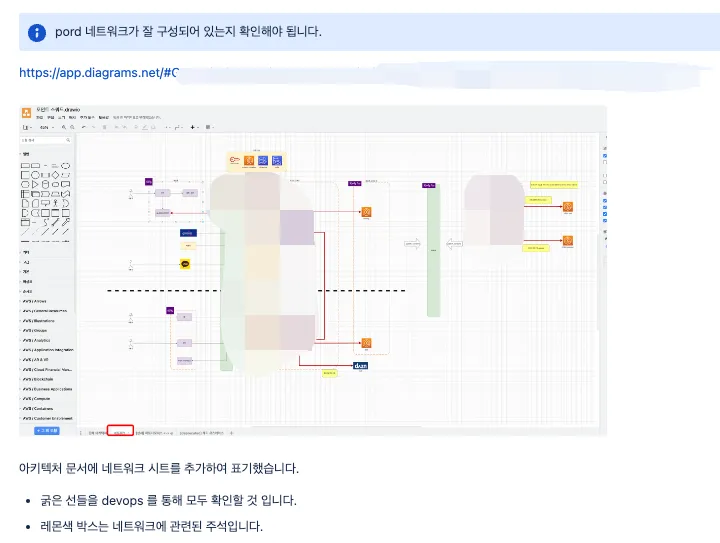
Each delegated task includes owner, goal, and verification criteria — so the recipient can act immediately.
After the work is done, I record what was decided and why — so the team doesn’t re-derive the same analysis next time.
Sharing Knowledge Across the Team
Individual expertise that stays in one person’s head is a liability. I’ve built internal wikis, run tech talks, and structured knowledge-sharing sessions so what one person knows becomes something the whole team can draw on — especially during onboarding and incidents.
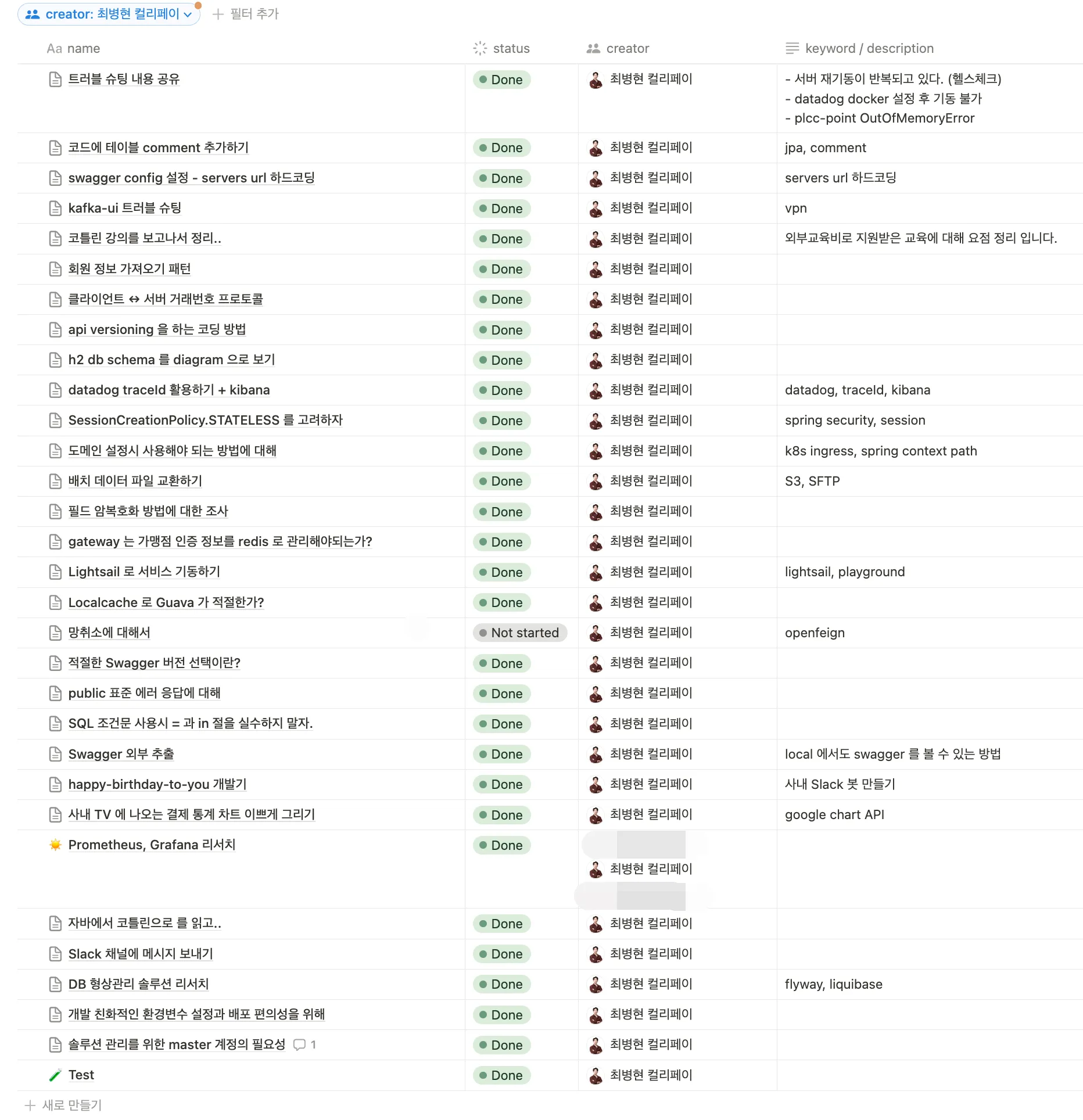
An internal wiki covering recurring topics: gift cards, settlement, and incident response.
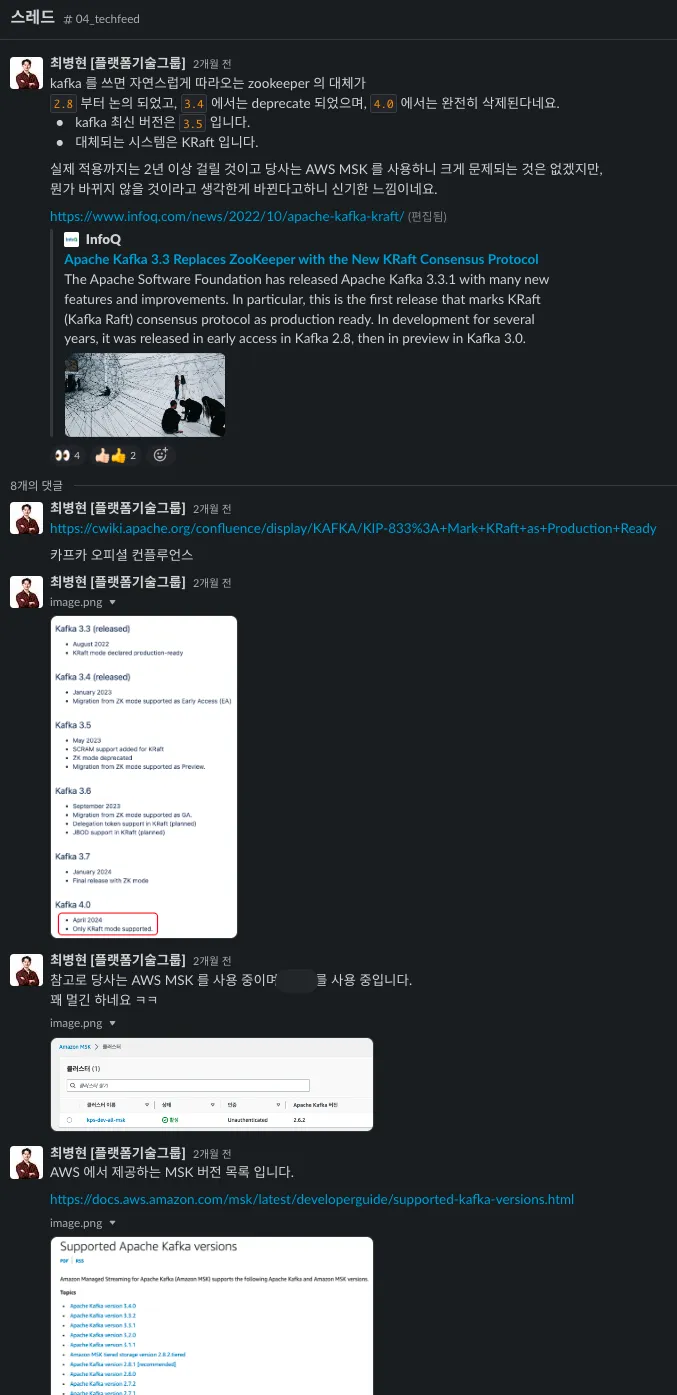
Tech talks structured to leave reusable reference material, not just the talk itself.
Closing the Loop Between Learning and Code
I treat learning as a pipeline: study a topic → validate it in a side project → apply it to production. Recurring topics — Kotlin, Spring, testing, external integrations — get organized into personal templates ready to pull from directly.
Code review and mentoring extend this further: I surface recurring issues as learning topics, then close the loop in onboarding and future reviews.
One concrete example: I defined a standard Error DTO to prevent response format drift across services. Rather than just documenting the format, I aligned the exception-handling flow with the API response spec — reducing debugging cost and client integration friction.
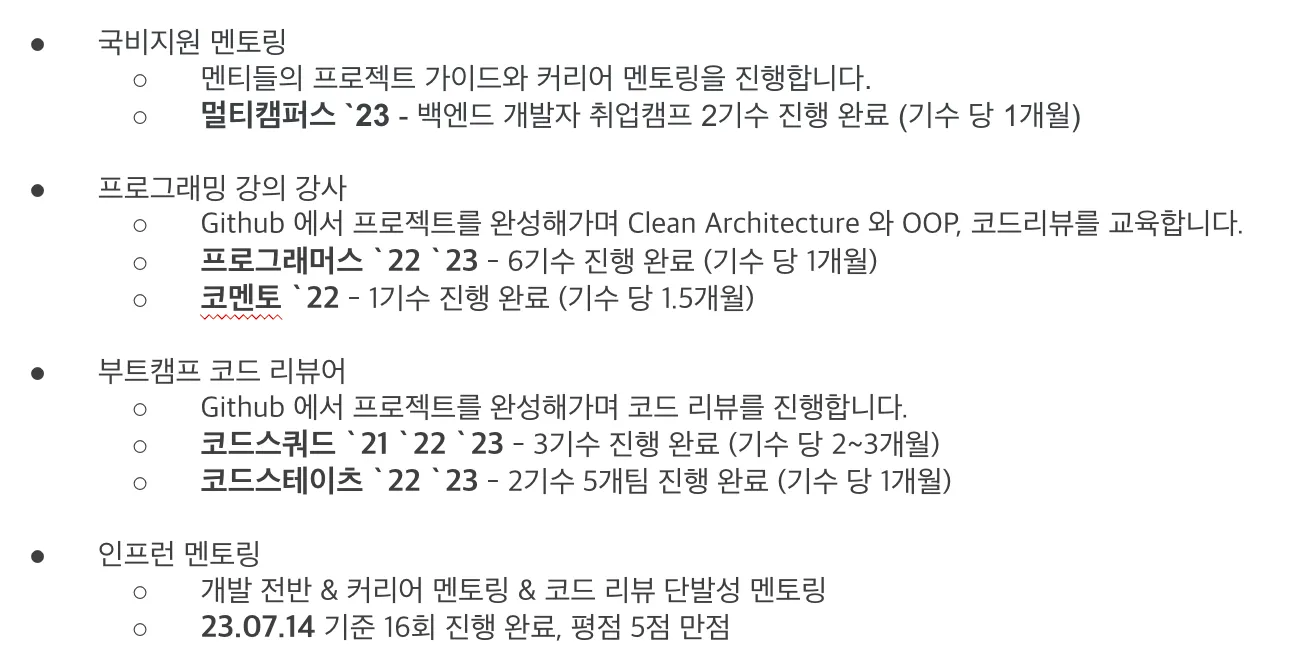
Code review against explainable criteria, with recurring issues turned into learning topics.
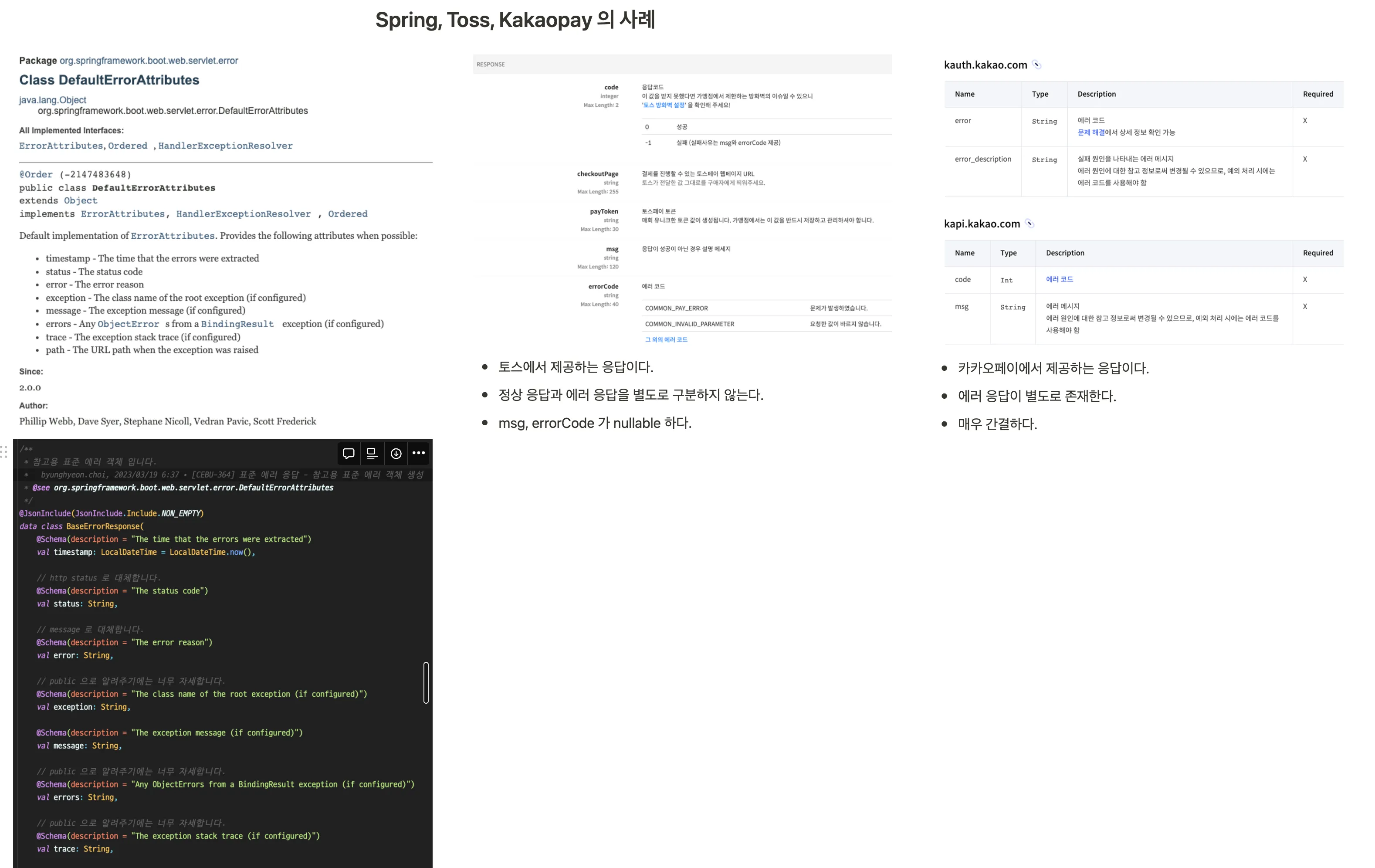
A standard Error DTO aligning exception handling with the API response spec.